Postdoctoral Researcher · Truveta · Bellevue, WA
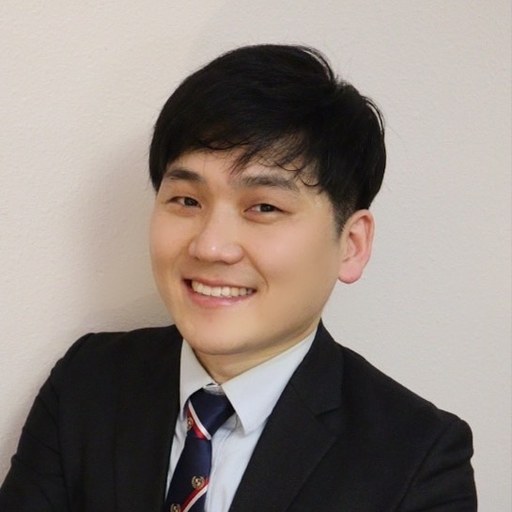
I am a machine learning researcher working on high-stakes clinical AI. On Truveta's AI & Workflows team I train foundation models on longitudinal electronic health records to predict how patients' health evolves over time, and build the agent systems that reason over them — multi-agent and deep-agent architectures, LangChain pipelines, automated prompt optimization — for oncology and cardiology risk prediction, together with the clinical NLU and MCP tooling that connect them to real clinical workflows.
My Ph.D. in measurement and statistics (University of Washington) and postdoctoral training in causal inference (Harvard) give me a foundation most ML researchers don't have — evaluation frameworks, latent variable modeling, validity theory — and I've carried it from education and human behavior into high-dimensional healthcare. It's why I also build the benchmarks that decide whether a model is calibrated, interpretable, and fair enough to act on. Validity is not a final step; it is a design constraint.
Recent
American Society of Clinical Oncology (ASCO) · Chicago, IL
International Society for Pharmacoeconomics and Outcomes Research (ISPOR) · Philadelphia, PA
Under review
Selected work
A training-free multi-agent LLM framework reaching AUROCs of 0.64–0.80 across 15 cancer types. arXiv preprint; presented at ASCO 2026.
A fine-tuned LLM reached 73% sensitivity at 91% specificity across 1,953 patients from 30 US health systems — a population current screening guidelines exclude on age alone. ASCO & AMIA 2025.
Whether LLM graders are psychometrically sound enough for high-stakes assessment. Three-part series; presented at AEFP and JSM 2024.